Cyprus 2026 Investment Guide: Which City Matches Your Financial Goals?

Buying property in Cyprus is often sold as a single idea: sunshine, demand, and a tidy return. The reality is more uneven. In 2026, the island’s economic backdrop still looks supportive, with mainstream forecasts pointing to steady growth rather than a boom. But property performance varies sharply by district and by the type of buyer you are trying to attract.
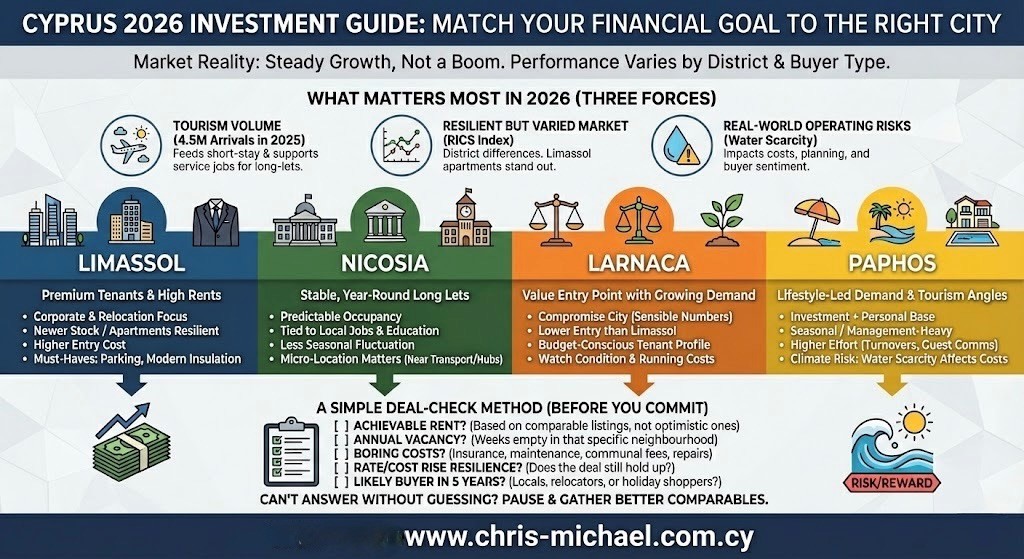
Are you prioritising rental income now, longer-term price growth, or a balanced, lower-stress hold? Once you set your goal, pick a city accordingly.
Quick match: Goal to city
- Premium tenants and high rents: Limassol
- Stable, year-round long lets: Nicosia
- Value entry point with growing demand: Larnaca
- Lifestyle-led demand and tourism angles: Paphos
What matters most in 2026
Three forces are doing a lot of the work:
- Tourism volume and seasonality. Cyprus posted a record tourism year in 2025, clearing roughly 4.5 million arrivals, which feeds short-stay demand and supports service jobs that spill into the long-let market.
- A resilient but varied property market. The RICS Cyprus Property Index (with KPMG) continues to show district-level differences. Limassol has stood out for stronger overall growth, with apartments repeatedly described as a resilient segment.
- Real-world operating risks. Water scarcity has become a headline issue, and that can filter into costs, planning decisions, and buyer sentiment over time, especially in tourism-heavy areas.
City guides: Choosing with your finances in mind
1. Limassol: Higher entry cost, strong premium demand
- Limassol is where many buyers go when they want the “international city” effect: corporate tenants, relocation budgets, and a strong preference for newer stock. Limassol has quite a strong demand when it comes to apartments.
- A good Limassol purchase usually comes down to rentability. Think parking, efficient layouts, modern insulation, and property management that doesn’t cut corners.
- If you monitor listings for apartments for rent in Limassol Cyprus, you’ll notice how quickly well-presented one and two-beds move compared with tired units that look fine on paper but feel dated in person.
Best suited to: Investors who can pay more up front and want tenants with higher budgets.
2. Nicosia: Steadier occupancy and fewer seasonal swings
- Nicosia tends to appeal to investors who value predictability. It is less exposed to holiday cycles and more tied to local employment, education, and public-sector rhythms. That doesn’t guarantee a better return, but it can mean fewer months of vacancy and less dependence on peak-season pricing.
- Where buyers go wrong is assuming “central” is always safer. Micro-location matters: access to offices, universities, and transport links often beats vague talk of being “near town”.
Best suited to: Investors focused on long-term lets and consistent cashflow.
3. Larnaca: Entry-value with a demand story
- Larnaca is often the compromise city in the best sense. It can offer a lower entry point than Limassol, while still benefiting from connectivity and a growing mix of renters.
- The simplest way to frame it is this: if you are not trying to top the rent charts, Larnaca can still produce sensible numbers with a less aggressive purchase price.
- If you are browsing apartments to rent in Limassol and wondering whether you are paying for lifestyle branding as much as fundamentals, Larnaca is worth a look. The tenant profile can be more budget-conscious, so condition and running costs matter.
Best suited to: First-time investors who want balance and a clearer margin for error.
4. Paphos: Lifestyle pull with tourism-driven options
- Paphos attracts lifestyle buyers and people who want their investment to double as a personal base. The rental picture can work well, but it is more management-heavy if you rely on seasonal demand.
- It helps to be honest about your tolerance for moving parts: furnishing, turnovers, guest communication, and compliance checks.
- One more practical point for 2026: climate-related pressures, including water supply constraints, are not abstract. They can affect operating costs, property features buyers ask about, and even local policy priorities.
Best suited to: Investors comfortable with a more hands-on approach and seasonal patterns.
A simple deal-check method before you commit
Run every property through the same five questions:
- What rent can you achieve based on comparable, not optimistic, listings?
- How many weeks a year might it sit empty in that specific neighbourhood?
- What are the annual “boring costs”: insurance, maintenance, communal fees, repairs?
- If interest rates or costs rise, does the deal still hold up?
- Who is your likely buyer if you sell in five years: locals, relocators, or holiday-home shoppers?
If you cannot answer these without guessing, pause and gather better comparables.
If you’d like a shortlist tailored to your budget and goals, Chris Michael Property Group can map real market pricing to your criteria and guide you from first call to keys in hand. Speak to the team to review likely rental demand, expected yield and a sensible exit route before you commit.
Also Read: Larnaca vs Limassol vs Paphos: Which Coastal City Offers the Best Capital Growth in 2026?
Frequently Asked Questions:
1) Which Cyprus city is best for rental yield in 2026?
There isn’t a single winner. Limassol often leads for premium rents, while Nicosia can offer steadier occupancy because it is less seasonal. RICS commentary in recent quarters points to apartments as a resilient category, with Limassol showing stronger overall growth than several other districts. The best “yield” is the one you can keep after costs and vacancy.
2) Is tourism still a key driver for property demand?
Yes, particularly for coastal markets and short-stay supply chains. Cyprus recorded a landmark year for arrivals in 2025, passing roughly 4.5 million visitors, and early 2026 data also showed year-on-year increases in arrivals. Tourism does not lift every neighbourhood equally, but it supports jobs and spending that feed into rentals.
3) Are apartments generally safer than houses for investors?
Often, but “safer” depends on your tenant target and building quality. RICS/KPMG index describe apartments as showing resilience over time, with modest rises in rental values led by apartments. Still, communal fees and maintenance standards can make or break the net return, so inspect the building’s track record.
4) What should I watch for in 2026 that people overlook?
Operating realities. Water scarcity has become a serious issue on the island, and policy responses include more desalination and conservation measures. For a buyer, that can translate into questions about utility reliability, running costs, and how well a property is set up for efficient use.
5) How do I judge rental demand in Limassol quickly?
Focus on what renters really pick. Check how long similar homes stay listed and which features they have, then make sure your property matches. Search online for “flats for rent Limassol” and you’ll notice common favourites like parking, a modern kitchen, good insulation, and a well-managed building. Use that as a clue, then confirm it with local rental comparisons.